C-Section Recovery: What Nobody Tells You About Your Core
Recovering from a caesarean is about far more than the scar healing. Understanding what changes in your abdominal and pelvic floor function - and the timeline for rebuilding it - makes an enormous difference.

Your Pelvic Health Physio
Pelvic Health Physiotherapist
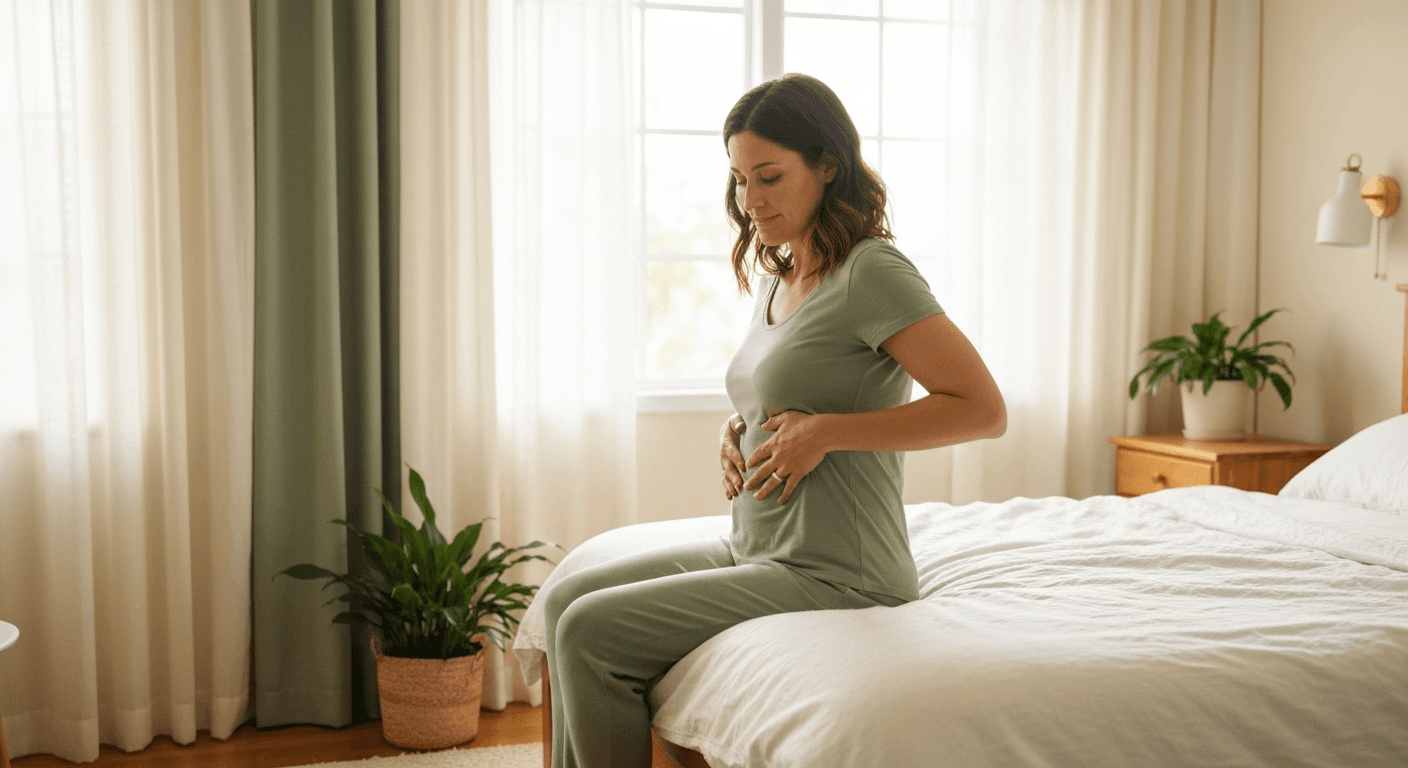
A caesarean does not protect your pelvic floor from pregnancy, which loads it for nine months whatever the birth type. It also cuts through the abdominal fascia and nerves, so recovery means rebuilding core function and managing scar tissue, not just healing the wound.
This article is for every mum who left the hospital with a folder of wound-care instructions and very little guidance on what to do about the core that was cut through to deliver her baby.
What does a caesarean actually involve?
A caesarean section involves incisions through multiple tissue layers: skin, fat, the fascia of the rectus sheath, and the uterus itself. The rectus abdominis muscles (your six-pack muscles) are not cut - they are moved aside. But the fascia that holds everything in place is cut and repaired. Nerve fibres that run through and around the incision site are inevitably affected.
The result is a healing wound at multiple tissue levels, altered sensation around the scar (numbness, hypersensitivity, or both), and significant disruption to the neuromuscular communication between your brain and your abdominal wall. For the weeks and months after a caesarean, your body is working around this disruption - often by recruiting other muscles to do what the abdominals cannot yet do effectively.
What happens to the pelvic floor after caesarean birth?
Your pelvic floor has carried the load of pregnancy for nine months regardless of how your baby was born. The progressive weight increase, hormonal changes, and postural adaptations of pregnancy affect the pelvic floor in every birth type. Caesarean-born women commonly report pelvic floor symptoms including stress incontinence, urgency, and pelvic heaviness, at similar rates to women who had uncomplicated vaginal births.
What is different after a caesarean is the added layer of core disruption. The relationship between your abdominal wall and your pelvic floor - which normally work together as part of your core pressure management system - is interrupted. Rebuilding this relationship requires a specific and careful approach.
How does scar tissue affect recovery?
Your C-section scar does not just exist at the skin surface. Scar tissue forms through all the layers that were incised, and as it matures over 12-18 months, it can create adhesions - areas where adjacent tissue layers that should glide freely against each other instead stick together. Adhesions in the abdominal wall can affect posture, restrict the movement of underlying structures, and create a pulling sensation at the scar during movement or exercise.
Scar tissue management - including massage of the scar once it is well healed (typically from around 6-8 weeks) - is an important and often overlooked part of C-section recovery. Beginning with very gentle scar massage helps restore tissue mobility and can significantly reduce adhesion formation. A physiotherapist can teach you the technique and monitor your progress.
What is the timeline for abdominal muscle reactivation?
In the first six weeks after a caesarean, your priority is wound healing. This means avoiding activities that significantly increase intra-abdominal pressure - heavy lifting, intense abdominal exercises, or anything that makes you brace hard. Gentle breathing exercises that reconnect the diaphragm and pelvic floor are appropriate from the early days, as is supported walking at a comfortable pace.
At 6-12 weeks, gentle abdominal activation can begin - not crunches or sit-ups, but exercises that reestablish the connection between your brain and your deep abdominal muscles (transversus abdominis). This is often more cognitively demanding than it sounds; the nerve disruption from surgery means this connection does not come back automatically.
From 3 months onwards, progressive strengthening is appropriate as long as symptoms are absent and healing is proceeding well. The return to high-impact activities follows the same timeline as after vaginal birth - 3 months at the earliest for low-impact, with individual assessment guiding the return to running and gym-based training.
What should you watch for during recovery?
Seek physiotherapy or medical review if you experience a feeling of your wound pulling or tearing during normal activities, significant scar pain beyond the first few weeks, numbness or altered sensation that is not gradually improving, a "shelf" or overhang above the scar that feels tight or restricts movement, or any symptoms of pelvic floor dysfunction - leaking, heaviness, urgency, or pain.
The Postnatal Recovery programme includes guidance specific to C-section recovery, with appropriate modifications and progressions for the early months. If you have questions about whether specific exercises are appropriate for your stage of healing, please discuss them with your GP or physiotherapist.
References
- 1. Groom T, Donnelly G, Brockwell E. Returning to running postnatal. 2019.
- 2. Barros AE, et al. Pelvic floor dysfunction in primipara according to delivery mode. Prog Urol. 2015.
- 3. RANZCOG. Caesarean section - management and outcomes. College Statement C-Obs 23. 2021.
- 4. Australian Physiotherapy Association. Post-caesarean rehabilitation. 2022.

Your Pelvic Health Physio
AHPRA registered · 10+ years clinical experience
As a pelvic health physiotherapist with over 10 years of experience, I've worked with hundreds of women navigating their postpartum recovery.
Ready to start your recovery?
The Postnatal Recovery programme gives you physiotherapist-designed, evidence-based guidance to rebuild your pelvic floor and core from home - at your own pace.
View the programme