Sleep Deprivation and Your Recovery: The Overlooked Connection
Nobody warns you about how sleep deprivation affects the physical recovery process. The science is clear: chronic sleep deficit slows tissue healing, disrupts hormonal recovery, and keeps your nervous system in a state that works against rehabilitation.

Your Pelvic Health Physio
Pelvic Health Physiotherapist
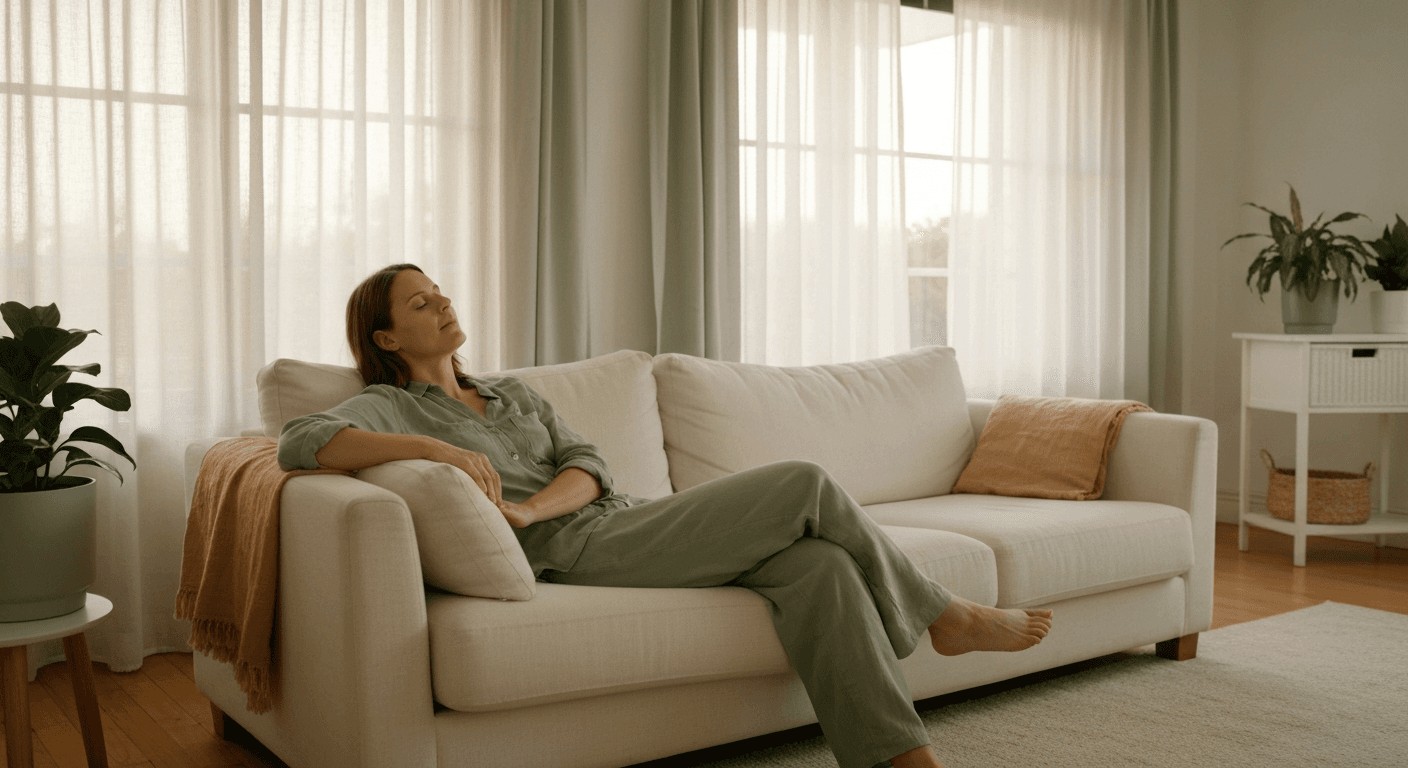
Chronic sleep deprivation slows postnatal recovery: it reduces the growth hormone that repairs tissue, raises cortisol that breaks tissue down, and keeps your nervous system tense, which makes pelvic floor rehabilitation harder. Treating sleep as part of recovery genuinely helps healing.
What happens to your body when you are chronically sleep-deprived?
Sleep is not a passive state. It is the period during which your body does the majority of its active tissue repair. Growth hormone - which drives muscle repair, collagen synthesis, and tissue remodelling - is secreted primarily during deep sleep. After a caesarean or significant perineal trauma, your body has an extraordinary amount of tissue repair to complete. Fragmented, insufficient sleep directly reduces the output of growth hormone and slows this process.
Cortisol, your primary stress hormone, rises significantly with sleep deprivation. Chronically elevated cortisol has a catabolic effect - it breaks down tissue rather than building it. It also suppresses immune function, increases inflammation, and disrupts the hormonal balance that the postnatal period is already navigating. Oestrogen and progesterone are adjusting dramatically after birth; sleep deprivation compounds this disruption and can contribute to mood instability and prolonged physical recovery.
How does sleep affect your nervous system and pelvic floor?
The pelvic floor is not just a group of muscles - it is a group of muscles under significant nervous system influence. Chronic sleep deprivation keeps your autonomic nervous system in a sympathetic (fight-or-flight) dominant state. In this state, muscles - including the pelvic floor - tend toward higher baseline tension.
This is one reason why pelvic floor symptoms often feel worse when you are exhausted. A nervous system that is constantly hypervigilant makes it harder for your pelvic floor to relax fully, harder to access a deep, calm contraction, and harder to make neuromuscular progress with rehabilitation exercises. You may find the same exercise that felt manageable one day feels impossible on four hours of broken sleep - and this is a physiological reality, not a failure of effort.
How does sleep deprivation affect postnatal mental health?
The link between sleep disruption and postnatal depression and anxiety is well-established in research. This is not a straightforward cause-and-effect relationship - it is bidirectional. Sleep deprivation worsens mood, and depression and anxiety worsen sleep. The physiological mechanisms overlap: both involve dysregulation of cortisol, serotonin, and the hypothalamic-pituitary-adrenal axis.
This matters for physical recovery because anxiety and depression affect motivation, pain perception, and the ability to engage with rehabilitation. A body that is under significant psychological stress heals more slowly. Looking after your mental health is genuinely part of your physical recovery strategy.
What can you actually do about it?
The honest answer is that with a newborn, you cannot always get the sleep you need. What you can do is treat sleep as a priority rather than a luxury, protect whatever sleep you do get from unnecessary disruption, and reduce the impact of sleep deprivation where possible.
Sleep when the baby sleeps where you can - even short naps of 20-30 minutes provide measurable benefit. Divide the overnight feeding shift with your partner if possible, so each of you gets at least one longer stretch. Reduce screen time in the hour before bed, as blue light suppresses melatonin production. Keep your room as dark and cool as is practical. And - importantly - ask for and accept help, because reducing your overall load is one of the most evidence-based strategies for improving sleep quantity and quality in the postnatal period.
How should you calibrate your rehabilitation expectations?
If you are in the thick of newborn sleep deprivation, please adjust your expectations of your rehabilitation progress accordingly. Progress will be slower than it would be with adequate sleep. That is not failure - it is physiology. The Postnatal Recovery programme is designed to be done in short, manageable sessions precisely because we understand the reality of new parenthood. A 15-minute session done consistently will always outperform a 45-minute session you cannot sustain.
Be kind to yourself about this. The fact that you are thinking about your recovery while running on sleep debt is genuinely impressive. The improvements will come - and they will accelerate as your sleep improves.
References
- 1. Besedovsky L, Lange T, Born J. Sleep and immune function. Pflugers Arch. 2012.
- 2. Leproult R, Van Cauter E. Role of sleep and sleep loss in hormonal release and metabolism. Endocr Dev. 2010.
- 3. Dørheim SK, et al. Sleep and depression in postpartum women. Sleep. 2009.
- 4. Meerlo P, et al. New neurons in the adult brain: the role of sleep and consequences of sleep loss. Sleep Med Rev. 2009.

Your Pelvic Health Physio
AHPRA registered · 10+ years clinical experience
As a pelvic health physiotherapist with over 10 years of experience, I've worked with hundreds of women navigating their postpartum recovery.
Ready to start your recovery?
The Postnatal Recovery programme gives you physiotherapist-designed, evidence-based guidance to rebuild your pelvic floor and core from home - at your own pace.
View the programme